
Quality and Precision in Elevator Guide Rails: Details That Define Ride Comfort
Quality and Precision in Elevator Guide Rails: Details That Define Ride Comfort
When evaluating elevator quality, attention is often given to car design, speed, capacity, door systems and control technologies. However, some of the most important factors behind stable car movement and comfortable travel are found within the elevator shaft. Elevator guide rails are among these fundamental components.
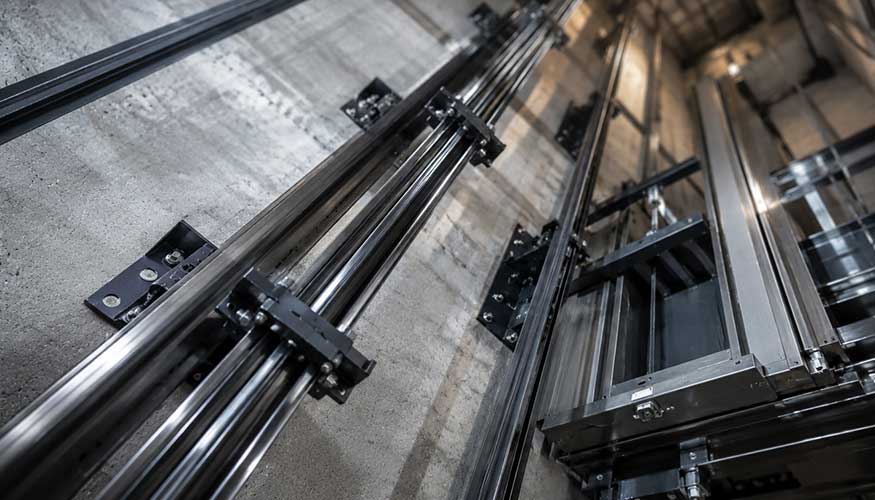
Guide rails help maintain the defined vertical path of the elevator car and counterweight. Strength alone is therefore not sufficient. Profile geometry, straightness, surface characteristics, joint accuracy and dimensional consistency throughout production can all influence overall system performance.
Çelikray approaches quality and precision as fundamental elements in the manufacturing of elevator guide rails.
Why Is Manufacturing Precision Important?
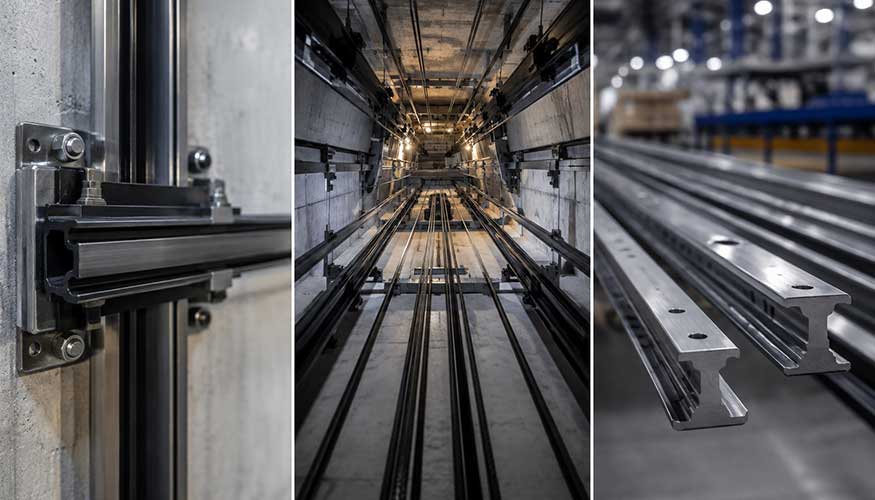
The guide path inside an elevator shaft is not normally formed from a single continuous rail. Individual rail sections are installed one after another to create the complete vertical guide line for the car and counterweight.
For this reason, dimensional consistency and accurate joint areas are particularly important. Unwanted differences between individual sections may influence the guidance characteristics of the entire rail line.
Consistent manufacturing dimensions help individual sections fit together correctly and contribute to the creation of a more uniform guide path.
Can Rail Surface Quality Affect Ride Comfort?
Guide shoes or roller guides installed on the elevator car continuously interact with the working surfaces of the rails. Surface characteristics are therefore among the factors influencing guidance behaviour.
Appropriate surface properties and geometric continuity can support more stable interaction between the rail and guiding elements, contributing to the control of vibration and irregular movement.
The importance of manufacturing precision can become even more noticeable in elevators with higher rated speeds or longer travel distances. Guide rail quality should therefore be evaluated not only in terms of durability but also in relation to ride performance.
The Importance of Rail Joints
Individual elevator guide rails are connected along the shaft, making joint areas an important part of the complete guide system. The transition between the end of one rail and the beginning of another should be as consistent as possible.
Geometric compatibility at connection points contributes to maintaining continuity throughout the rail line. Precision manufacturing and correct installation help minimize irregularities as guide shoes or rollers travel across these areas.
Manufacturing quality and installation accuracy should therefore be considered together when aiming for stable elevator performance.
Straightness and Rail Line Geometry
An elevator car travels along a long vertical path, meaning that the geometry of the completed guide line is important.
Deviations in individual rails or installation alignment can influence the behaviour of guide components. This becomes increasingly important in applications involving greater speeds, longer travel distances or intensive use.
In a quality-focused manufacturing process, profile dimensions, straightness and geometric consistency should all be carefully considered.
Guide Rail Quality and Maintenance
Regular maintenance is essential for safe and efficient elevator operation. However, correct component selection and installation can also support more predictable maintenance requirements.
Irregular guidance behaviour may contribute over time to different wear patterns on guide shoes, rollers and related components. Suitable rail geometry and correct alignment help guide components operate closer to their intended conditions.
A high-quality guide rail is therefore important not only during initial installation but throughout the operational life of the elevator.
Quality Control as Part of Manufacturing
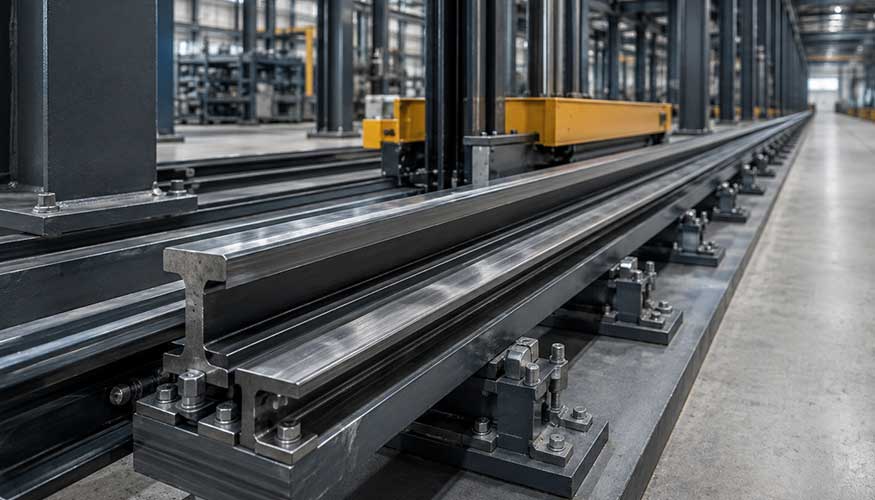
Consistent industrial quality cannot be achieved through material selection alone. Controls carried out during different stages of production play an important role in maintaining product consistency.
Dimensions, profile geometry, straightness, surface characteristics and connection areas are among the aspects associated with elevator guide rail performance.
Monitoring manufacturing processes according to defined technical requirements helps maintain consistent quality across production.
Çelikray: A Quality-Focused Approach to Elevator Guide Rail Manufacturing
Çelikray focuses on quality, manufacturing precision and product reliability in the production of elevator guide rails. The objective is not simply to manufacture a steel profile but to provide a fundamental component that supports accurate and stable elevator operation.
From residential elevators and commercial buildings to projects with different capacities and travel requirements, guide rails remain an essential part of elevator systems.
Appropriate materials, controlled manufacturing, dimensional precision and a consistent quality approach form the foundation of reliable and durable guide rail solutions.
For Çelikray, guide rail quality is not simply a production criterion. It represents a comprehensive approach supporting safe movement, ride comfort and long-term elevator system performance.